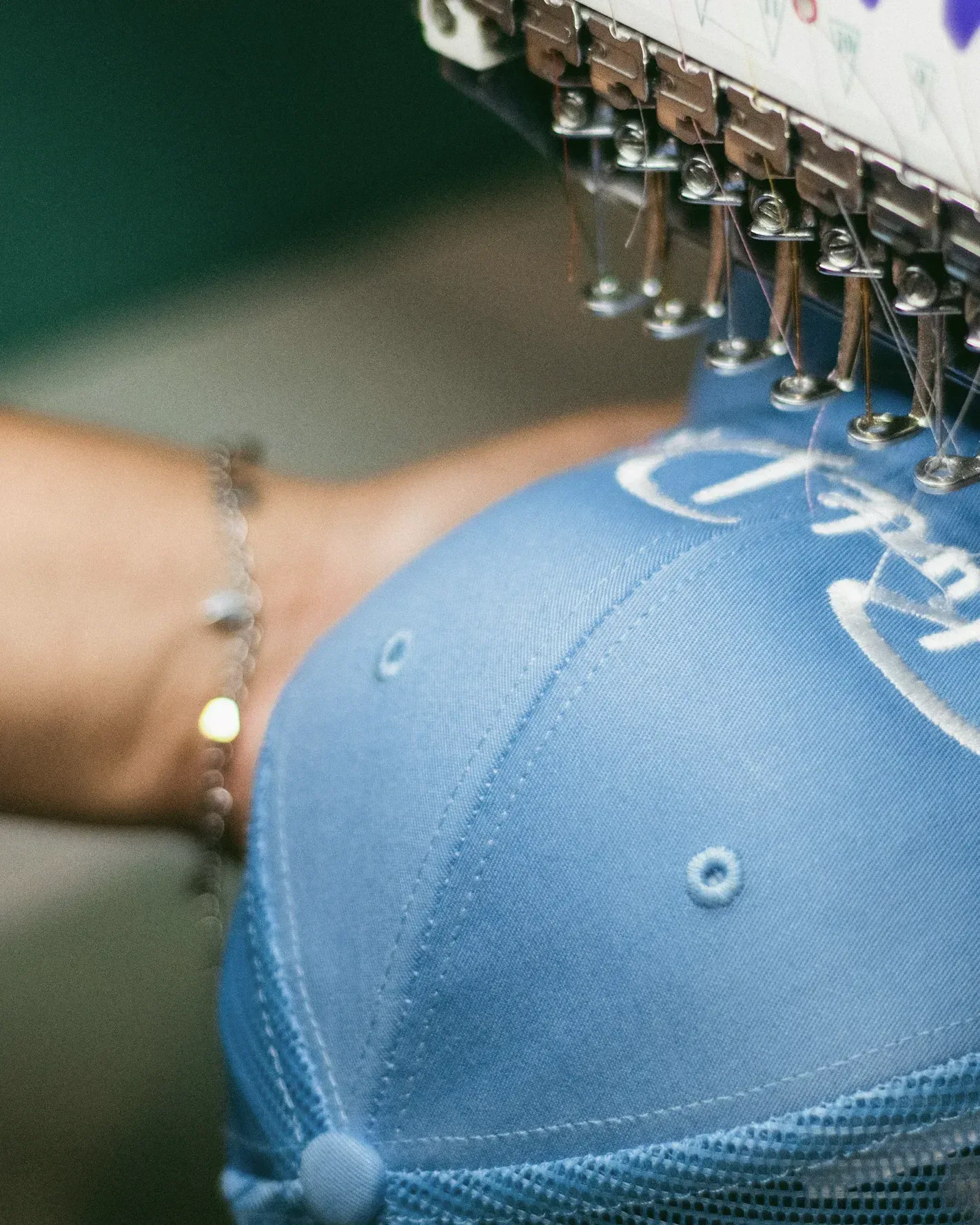
Product Development & Sampling
Development turns a brief into a specification that a production line can repeat. The approved sample and tech pack together become the standard for bulk. This page explains what goes into each, how sample rounds work, and which changes are cheap or expensive at each stage.
From brief to tech pack
After the quotation is accepted, a tech pack is prepared from your brief and sent to you for approval before sampling. The tech pack translates intent into instructions. A reference photo shows what a cap looks like; a tech pack says how it is built, in which materials, with which measurements and colors.
- Construction: panel count, crown profile, structure, eyelets, top button and seam finish.
- Materials: shell fabric, mesh, sweatband, lining and brim board.
- Artwork and placement: each logo with size, position and distance from a reference seam or edge.
- Decoration method: flat embroidery, 3D puff, patch type or print method per position.
- Colors: fabric, thread and trim colors, referenced by Pantone TPX or TCX codes or physical swatches.
- Dimensions: crown height, brim length and width, size or size range.
- Trims and labels: closure type, seam tape, inside labels, hangtags and packaging.
Read the tech pack line by line. Every unchecked assumption becomes part of the sample. The guide on cap tech packs shows a complete example.
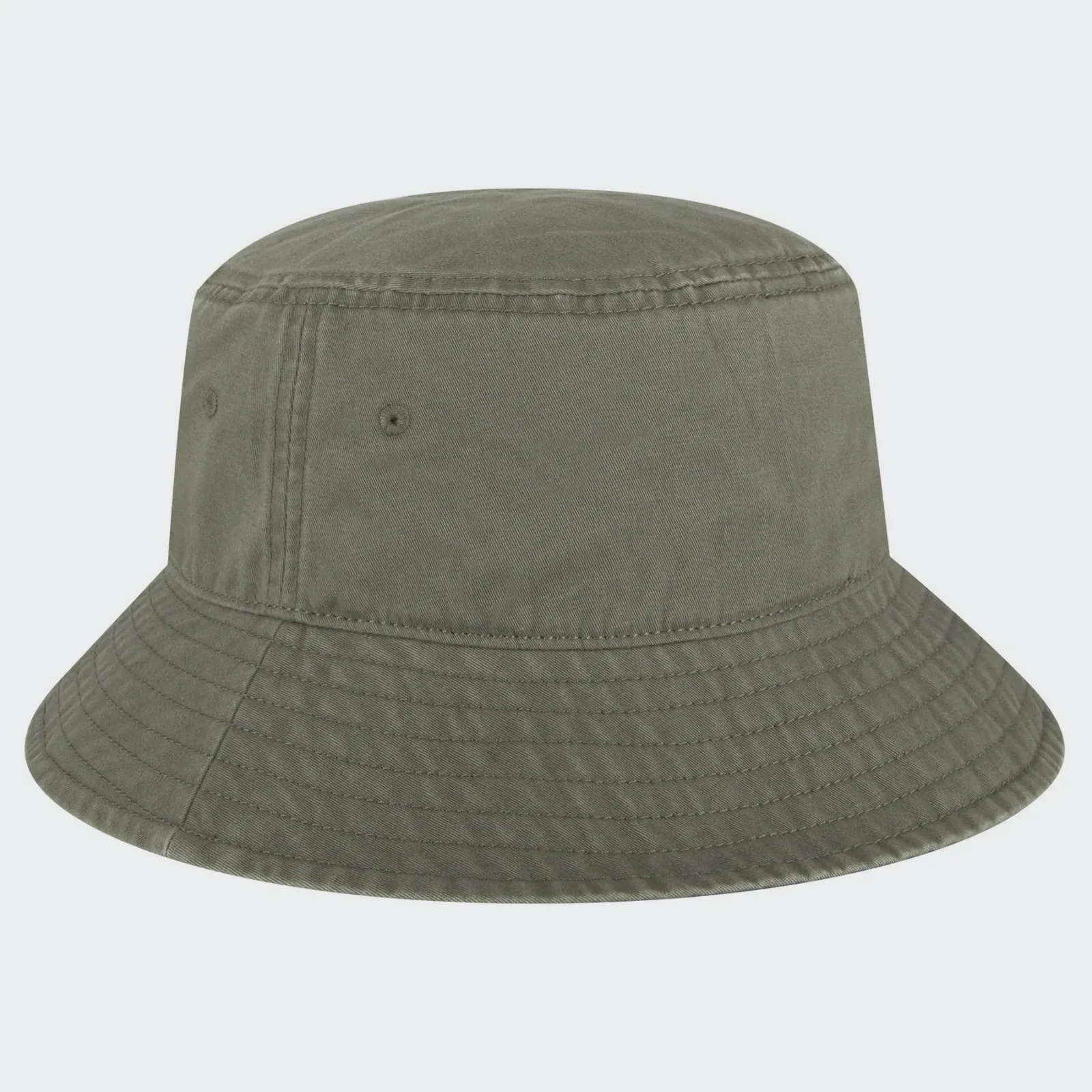
- Button
- Eyelet
- Side panel
- Front panel + buckram
- Brim (insert inside)
- Sweatband + seam tape
- Closure
- Panel seam, double topstitched
Sample types and when to use them
Not every project needs every sample type. Choosing the right one saves time and keeps the development budget proportional to the order.
| Sample type | Purpose | Relative cost | When it is useful |
|---|---|---|---|
| Decoration strike-off | Tests embroidery or print on the actual fabric | Low | New logo, small text, 3D puff, color-critical artwork |
| Lab dip | Matches a custom fabric dye color | Low | Custom-dyed fabric or a strict brand color |
| Proto sample | Checks shape, fit and construction | Moderate | New pattern or significant change to crown or brim |
| Pre-production sample | Full cap in final materials and decoration | Moderate | Every order, as the approval reference for bulk |
| Top-of-production sample | Taken from the bulk run for comparison | Low | When the buyer wants a check before shipment |
For a private label cap on an existing base style, a single pre-production sample is often enough. For a new pattern, a proto sample in available fabric comes first, so shape and fit are settled before final materials are committed.
Timing and revision rounds
Sampling typically takes 7 to 14 days depending on design, counted from tech pack approval. Custom components such as dyed fabric, woven labels or engraved closures may not be available in final form for the first sample. In that case, the sample uses the closest available substitute and the difference is noted on the tech pack.
- Tech pack approved by the buyer.
- Sample produced and checked internally against the tech pack.
- Sample sent with photos and measurements.
- Buyer reviews and returns comments in writing, ideally marked on photos.
- If changes are needed, the tech pack is revised and a new sample round starts.
- Buyer approves the sample in writing. That sample and tech pack version are the bulk standard.
Each revision round restarts the sampling clock. Consolidate comments into one reply instead of sending them over several days. Separate must-change items from preferences, so the next round addresses what matters.
Giving useful feedback
Write comments as measurable instructions where possible. Lower the crown by a small amount, move the logo closer to the brim, use a darker thread shade: each of these can be translated directly into the next tech pack. Comments such as make it look more premium are hard to act on without a reference, so attach a photo of a cap that shows what you mean.
What to check on a sample
- Overall shape: crown height, front slope and how the cap sits on the head.
- Panel alignment and center seam position relative to the front logo.
- Brim curve, length and stitching rows.
- Embroidery size, position, density and legibility of small details.
- Colors under daylight against your Pantone or swatch references.
- Closure function and size adjustment range.
- Sweatband comfort, seam tape and label positions.
- Hangtag, sticker and polybag details if packaging is part of the sample.
Photograph the sample on a head form or a person from the front, side and top. Comments are clearer when they point to a specific spot in an image. The custom headwear sampling guide covers review technique in more depth.
The cost of change by stage
The later a change is made, the more it costs. This is not a policy; it follows from what has already been ordered or produced.
| Stage | Typical change | Effect on cost | Effect on schedule |
|---|---|---|---|
| Quotation | Fabric, quantity, decoration method | Requote only | None |
| Tech pack | Logo size, thread color, label text | None | Minimal |
| Sample review | Crown height, brim curve, embroidery density | Additional sample | One more sample round |
| After approval, before materials | Color or trim change | Possible revised sample | Delays material ordering |
| After materials are ordered | Fabric or color change | Material cost carried by the change | Significant delay |
Once the sample is approved, the project moves to bulk production. Material ordering, decoration setup and the quality control plan are all based on the approved sample. For construction decisions to settle before sampling, see cap construction and panel design.
Questions buyers ask
How long does a cap sample take?
Sampling typically takes 7 to 14 days depending on design, counted from tech pack approval. Each additional revision round adds a new sampling cycle.
Can the sample be made in the final custom materials?
Where the materials are available, yes. Custom-dyed fabrics and branded trims may need their own production time, so the first sample can use the closest available substitute, noted on the tech pack.
What happens after I approve the sample?
The approved sample and tech pack version become the standard for bulk production and inspection. Materials are ordered and bulk production is scheduled according to the lead time on the quotation.
Let's make your cap.
Style, quantity, colors and artwork are enough to start. A project contact replies with questions or a quotation.