Structured vs Unstructured Caps
A structured cap has a reinforced front that holds its shape; an unstructured cap has no front support and relaxes to the head. The choice affects silhouette, decoration options, finishing and how the caps should be packed.
Updated · Caps Island product development
Key takeaways
- Structured caps use buckram or fused backing behind the front panels; unstructured caps have none.
- Structured fronts give a stable base for large and raised embroidery, especially 3D puff.
- Unstructured caps suit washed, garment-dyed and casual styles, and fit a wider range of head shapes comfortably.
- Soft-structured constructions sit between the two and are worth sampling when neither extreme fits.
- Structure, crown profile and decoration should be decided together, not one at a time.
What structure actually means
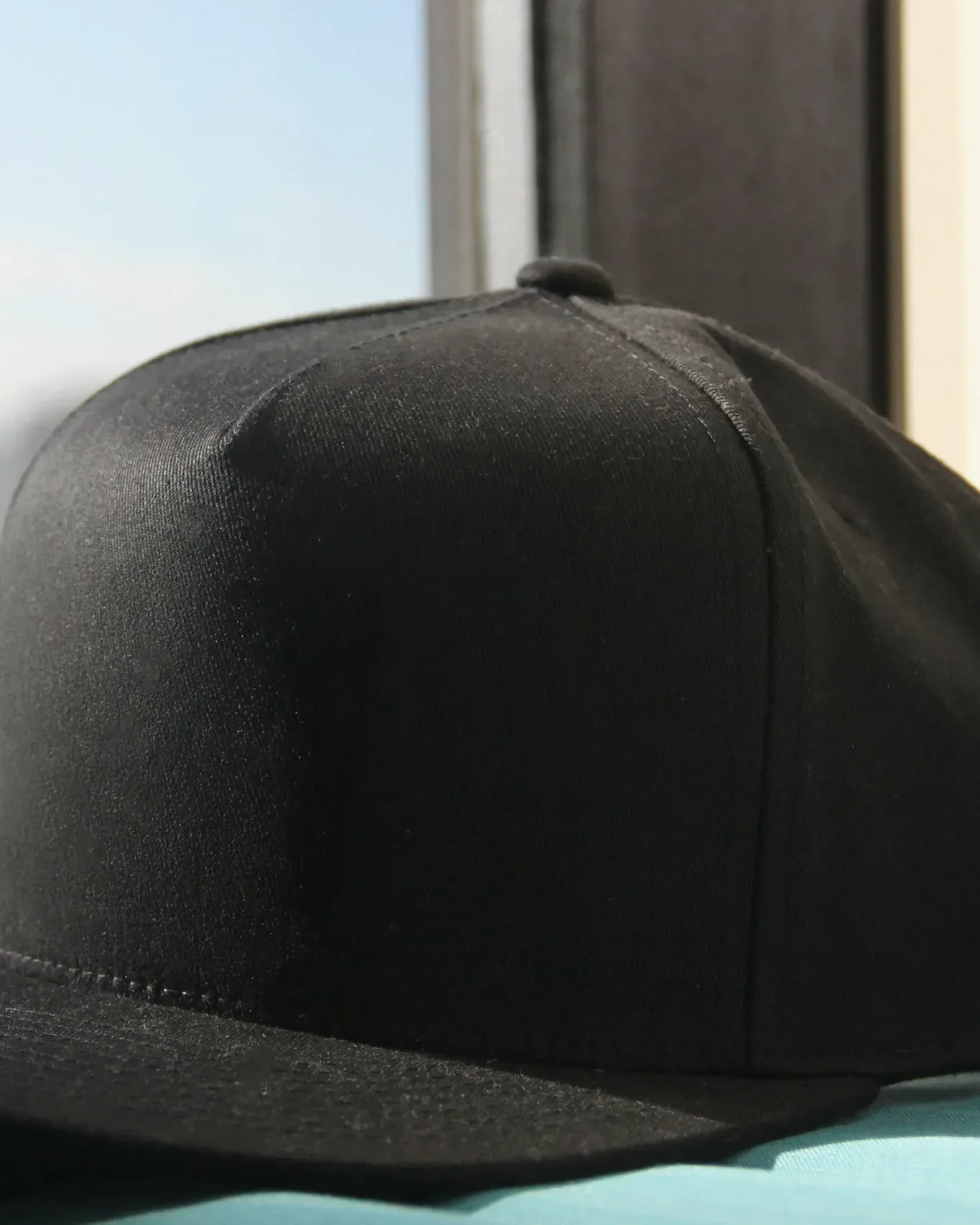
Structure refers to the front of the crown. In a structured cap, the front panels are reinforced with buckram, a stiff woven support material, or with a fused backing bonded to the fabric. The front stands up on its own, keeps its height when the cap is off the head, and presents the logo on a firm, upright surface.
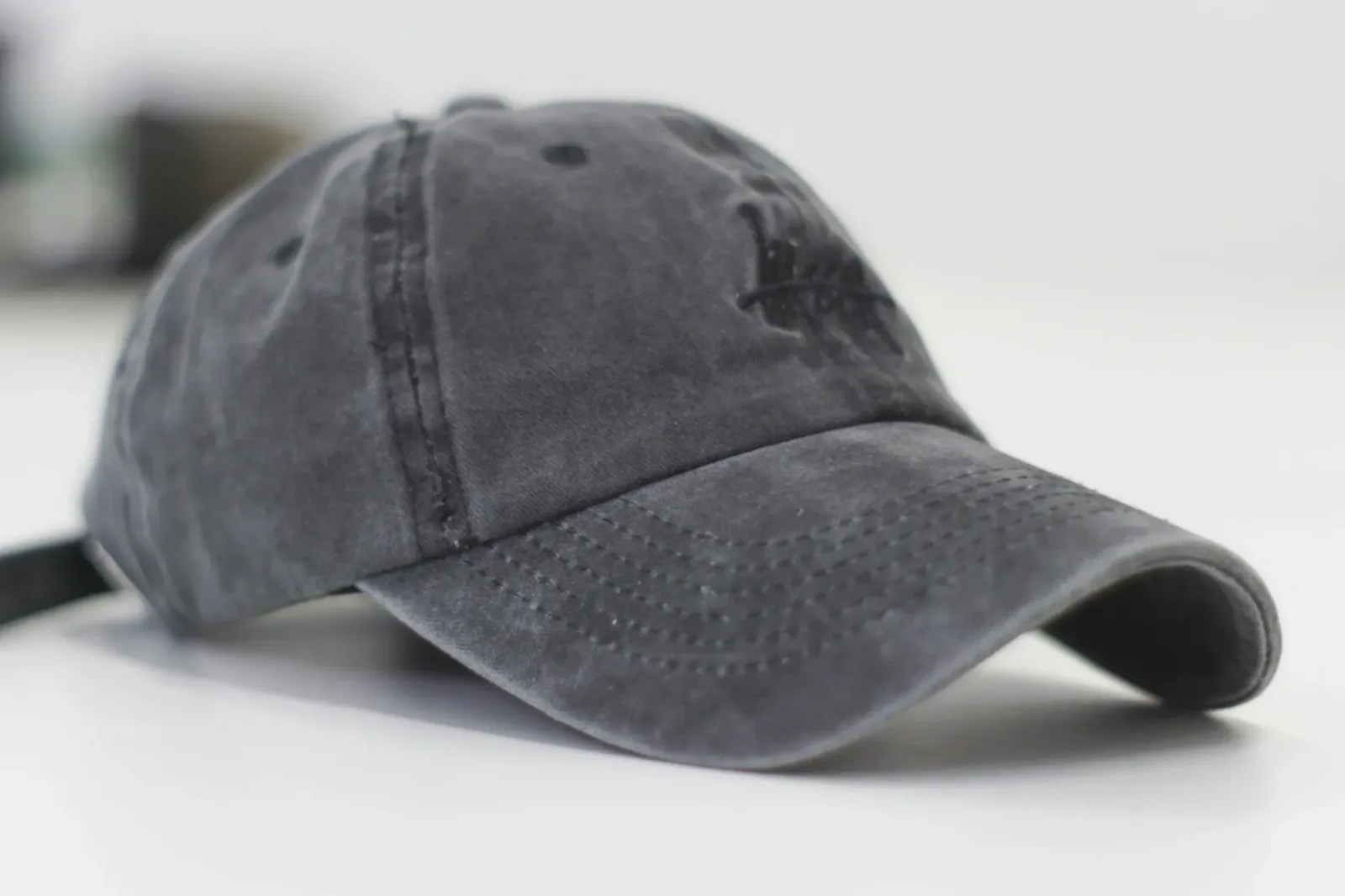
In an unstructured cap, the front panels have no reinforcement. The crown is soft, folds easily, and relaxes to the shape of the wearer's head. The front sits lower on the forehead and the cap looks casual, which is why the classic washed dad cap is almost always unstructured.
Between the two is soft-structured construction, which uses a lighter or more flexible support. It keeps some front shape without the rigid look of a full structured cap. Terminology varies between suppliers, so describe the result you want in the brief and judge it on the sample.
How structure works with crown profile
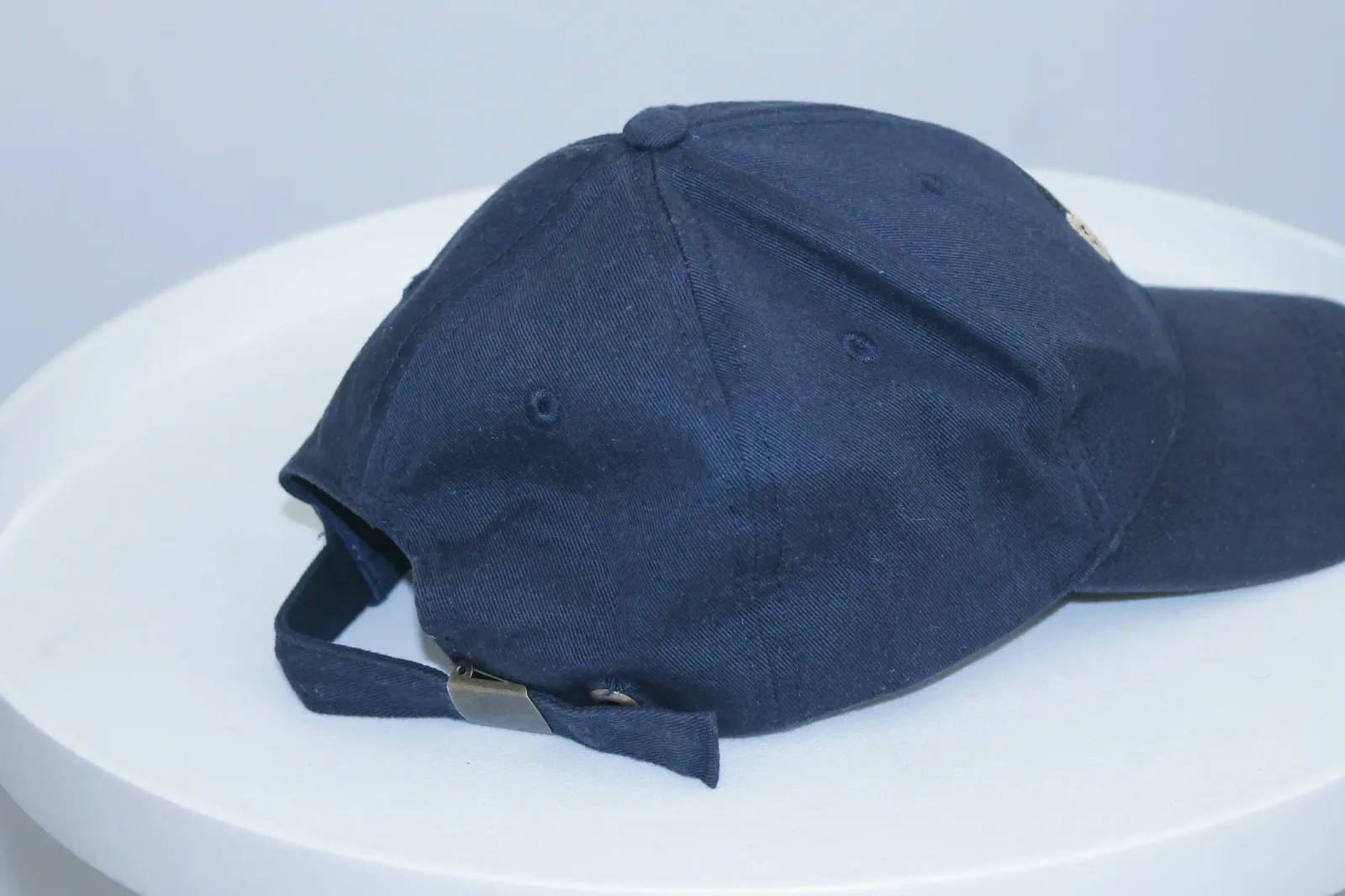
Crown profile describes crown height and the slope of the front: low, mid or high. Profile and structure are separate choices, but they interact. A high-profile crown almost always needs structure, otherwise the tall front collapses. A low-profile crown works well unstructured because there is less height to support. Mid-profile caps are the most flexible and are made in both constructions.
- Low
- Mid
- High
In practice the common pairings are a low-profile unstructured dad cap, a mid-profile structured baseball cap, and a high-profile structured snapback with a flat brim. See snapback caps and baseball caps for examples, and our guide to cap crown profiles for more on profile.
Brim shape follows the same logic. A flat brim visually extends the upright line of a structured front and is the expected pairing on high-profile snapbacks. A pre-curved brim softens the face and suits both structured and unstructured caps; on a relaxed dad cap it is almost always the right choice, because a flat brim on a collapsing crown tends to look unbalanced.
Fit and comfort across many wearers
Unstructured caps adapt to the wearer. The soft front molds to the forehead, so one size tends to feel comfortable on a wide range of head shapes. That makes them forgiving for merchandise and lifestyle products, where you cannot try caps on the end customer.
Structured caps hold their own shape, so fit depends more on crown depth and profile. A high structured front can feel tall on a smaller head, while a low structured front can feel shallow on a larger one. For orders where many different people will wear the same cap, such as staff uniforms or team kits, a mid-profile structured or soft-structured cap is usually the most balanced option.
Interior details matter in both constructions. In structured caps the buckram sits directly behind the front panels, so the sweatband and any front lining determine what the forehead touches. Specify a sweatband material suited to the use, for example cotton for everyday caps or a moisture-wicking band for sport, and ask for seam taping that covers the internal seams cleanly.
Comparison
| Factor | Structured | Unstructured |
|---|---|---|
| Front construction | Buckram or fused backing behind front panels | No front support |
| Shape off the head | Holds height and shape | Folds and relaxes |
| Look | Clean, upright, sporty or streetwear | Casual, soft, vintage or lifestyle |
| Typical profiles | Mid and high | Low and mid |
| Large or 3D puff embroidery | Well supported | Possible with backing; test on a sample |
| Garment washing | Limited; washing can distort buckram | Well suited |
| Packing | Needs nesting or boxing to protect the front | Can be packed flatter |
What structure means for decoration
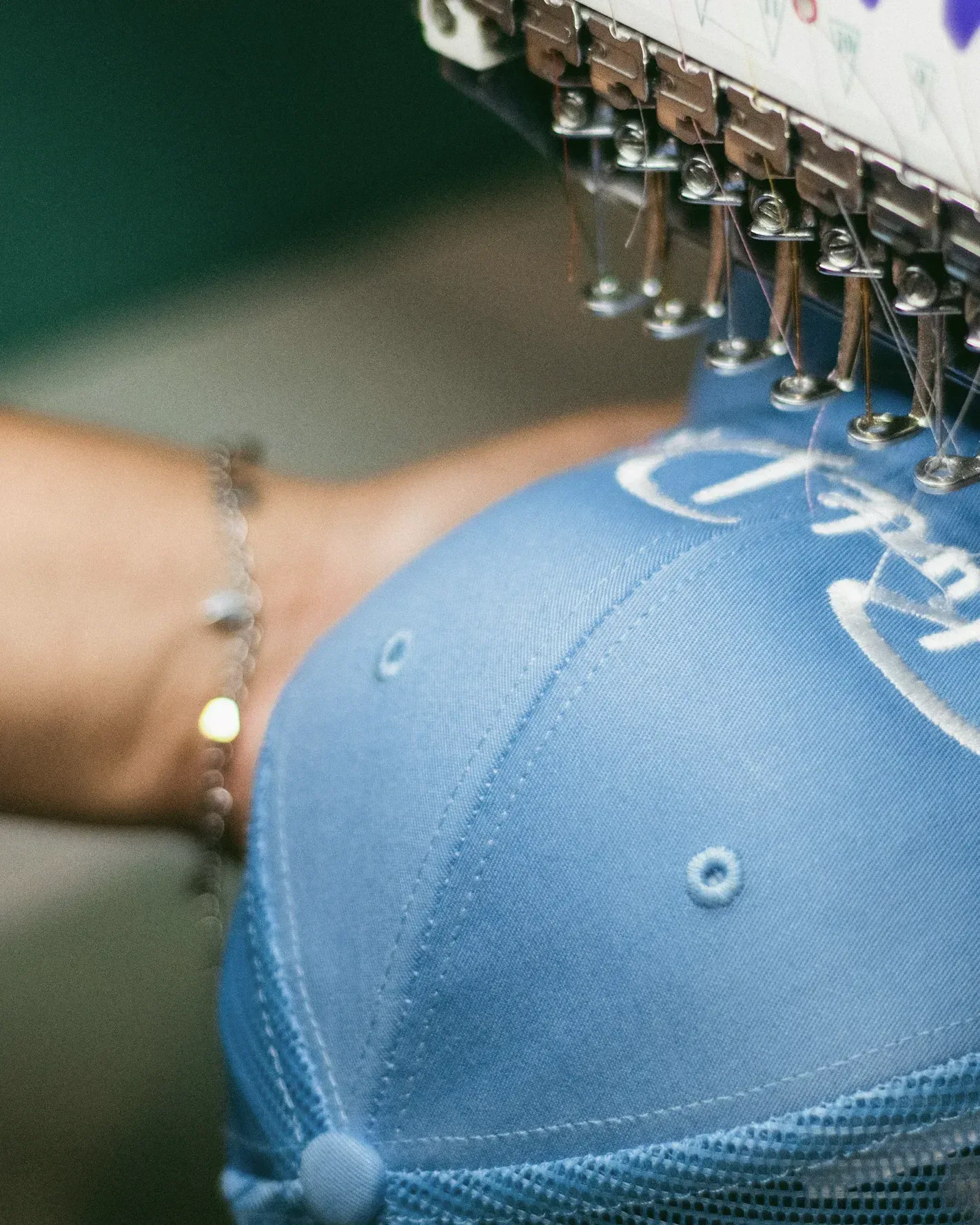
Embroidery pulls on fabric. Each stitch tightens the material slightly, and a dense logo can cause a soft panel to pucker or ripple around the design. A structured front resists that pull, so large logos stay flat and crisp. This is the main reason caps intended for bold front embroidery are usually structured.
3D puff embroidery is the clearest example. The foam underlay needs a firm base so the raised shape stays even across the front. On a structured cap the result is predictable. On an unstructured cap puff is possible, but the front can deform around the raised area, so it should be judged on a sample. Our guide to flat and 3D puff embroidery covers this in more detail.
Unstructured caps decorate well with smaller flat embroidery, patches and tonal logos. Embroidery on unstructured fronts is normally stitched with a stabilizing backing on the reverse that supports the stitches without stiffening the whole panel.
Patches behave differently again. A flexible woven or embroidered patch follows a soft front naturally. A rigid patch, such as PVC or thick leather, sits better on a structured front, where the surface stays flat and the patch edges do not lift when the crown bends. On unstructured caps, a smaller patch with rounded corners usually looks more settled than a large rectangle.
Logo size should also respect the front height. A structured high-profile front can carry a tall logo. On a low unstructured cap, the visible front area is smaller and partly curves away from view, so a logo that looks balanced on a snapback can look oversized. The tech pack states logo dimensions in millimeters; compare them against a cap you already own before approving.
Finishing, washing and packing
Many casual caps are garment washed or enzyme washed after sewing to soften the fabric and give a faded look. That process suits unstructured caps. A structured front can lose its shape or wrinkle when washed, so washed effects on structured caps are usually achieved with pre-washed fabric rather than washing the finished cap.
Washing also affects decoration. Embroidery on a garment-washed cap is washed with it, so thread colors soften slightly along with the fabric. If you want the logo to stay bright while the crown looks faded, ask whether the cap can be made from pre-washed fabric and embroidered afterward, and judge the effect on the sample.
Packing matters more for structured caps. A crushed structured front rarely recovers fully, so these caps are typically nested in stacks or packed in boxes that protect the crown during shipping. Unstructured caps tolerate flatter packing. If you ship long distances or plan to store stock in a warehouse, mention it so packing can be specified. See private label packaging for options.
Choosing the right construction
Work from the product and the wearer:
- A streetwear label releasing a flat-brim snapback with a large 3D puff logo: structured, high or mid profile.
- A lifestyle brand selling a washed cotton cap with a small tonal logo: unstructured, low profile.
- A corporate order for staff caps worn daily: structured or soft-structured, mid profile, for a consistent look across many wearers.
- A sports event needing lightweight caps for spectators: unstructured or soft-structured performance fabric, which packs easily for distribution.
- Define the silhouette you want customers to see: upright or relaxed.
- Match the crown profile to the structure.
- Check that the decoration size and method suit the front.
- Decide whether finished caps will be washed.
- Specify packing for structured caps.
- Confirm the result on a sample before bulk.
Structure also shapes how a cap is presented at retail. Structured caps display well on shelves and hooks because they keep their shape, and the logo stays visible. Unstructured caps are often displayed folded, stacked or on a head form, which suits a relaxed lifestyle presentation. If your caps will be sold in physical stores, consider how they will be shown before you decide.
When neither construction feels right, ask for a soft-structured sample alongside one of the others. Sampling typically takes 7 to 14 days depending on design, which is a small investment compared with reordering a whole range. More about construction options is on the cap construction and panel design page, or you can request a quote with your preferred style.
Questions, answered
Are structured caps better quality than unstructured caps?
No. Structure is a style and function choice, not a quality grade. Both can be made well or badly; quality depends on materials, stitching and finishing.
Can an unstructured cap have 3D puff embroidery?
It is possible, but the soft front can deform around the raised area. Structured fronts give more predictable results, so test puff on unstructured caps with a sample first.
What is buckram?
Buckram is a stiff woven support material placed behind the front panels of a structured cap to hold the front upright.
Let's make your cap.
Style, quantity, colors and artwork are enough to start. A project contact replies with questions or a quotation.