What Affects Custom Cap Manufacturing Costs
Cap pricing combines per-unit costs, one-off setup costs and logistics. Knowing which category each decision falls into helps buyers manage cost without weakening the product.
Updated · Caps Island product development
Key takeaways
- Setup costs such as digitizing, screens and custom labels are spread across the order, so variants matter as much as total quantity.
- Decoration is usually where similar-looking caps differ most in cost; stitch count, method and number of positions drive it.
- Small construction details each add material and sewing time, and together they add up.
- Compare quotations on the same specification and the same Incoterm.
How a cap quotation is built
A quotation for custom caps is the sum of several decisions, each with its own cost logic. Some costs scale with every unit, such as fabric and decoration. Others are one-off setup costs spread across the order, such as embroidery digitizing, print screens or custom label development. Packaging and logistics sit on top. Knowing which category a decision falls into is the fastest way to manage price without weakening the product.
Caps Island prices projects through a quotation step that follows your inquiry. This guide does not quote figures, because prices depend on the specification and are stated on the quotation. What follows is how each factor moves the cost, and what to weigh before trading one against another.
| Factor | Cost type | What raises cost | What lowers cost |
|---|---|---|---|
| Quantity and variants | Spreads setup | Small runs split across many colors | Fewer variants, more pieces per variant |
| Fabric | Per unit | Custom-dyed, technical, wool or specialty fabrics | Stock fabrics in available colors |
| Construction | Per unit | Extra panels, sandwich brims, extra stitching rows, complex patterns | Standard panel patterns and finishes |
| Decoration | Setup and per unit | Many positions, 3D puff, high stitch counts, custom patches | One or two positions, flat embroidery, simpler artwork |
| Closures and trims | Per unit | Custom metal hardware, leather straps, branded snaps | Standard plastic snaps or fabric straps |
| Labels and packaging | Setup and per unit | Custom woven labels, printed seam tape, individual boxes | Standard labels, bulk packing |
| Logistics | Per shipment | Air freight, urgent timing, delivered-duty terms | Road or sea, planned timing |
Quantity, MOQ and variants
The minimum order is 200 pieces for caps, bucket hats and visors, and 500 pieces for beanies. How that minimum applies per style or per color is confirmed on the quotation. Quantity affects unit cost mainly because setup work is divided across more pieces: a digitized embroidery file, a print screen or a custom label run takes much the same effort whether it serves a small or a large order.
Variants matter as much as total quantity. An order split into many colorways, each with its own thread colors and fabric, behaves like several small orders, with a setup and a material changeover for each. If the budget is tight, consolidating colorways or keeping the same decoration across colors usually saves more than cutting pieces from the total.
Fabric and construction
Fabric is a per-unit cost and one of the largest. Standard cotton twill, washed cotton and polyester fabrics in available colors are generally the most economical. Custom dyeing to a Pantone requires a lab dip and can carry its own minimum dye quantity. Wool blends, corduroy, technical stretch fabrics and recycled polyester can cost more depending on availability. The options are described on fabric and material options.
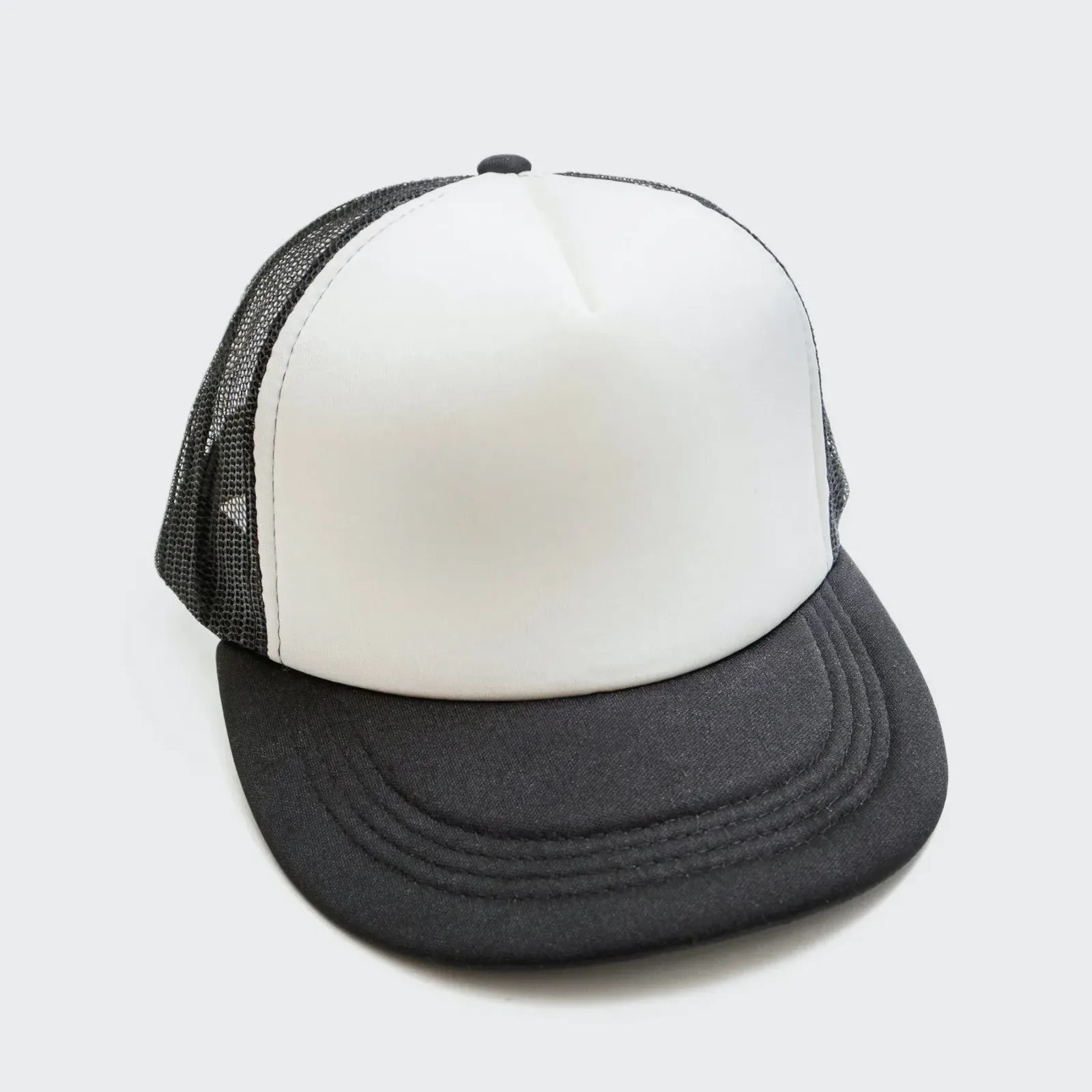
Construction adds labor. A five-panel cap has fewer seams than a six-panel, but a five-panel with a foam front and a contrast mesh back is not automatically cheaper than a plain six-panel. Each added detail, such as a sandwich brim, extra brim stitch rows, contrast eyelets, printed seam tape or a rope across the front, adds material and sewing time. None of these is expensive on its own; together they add up.
Decoration
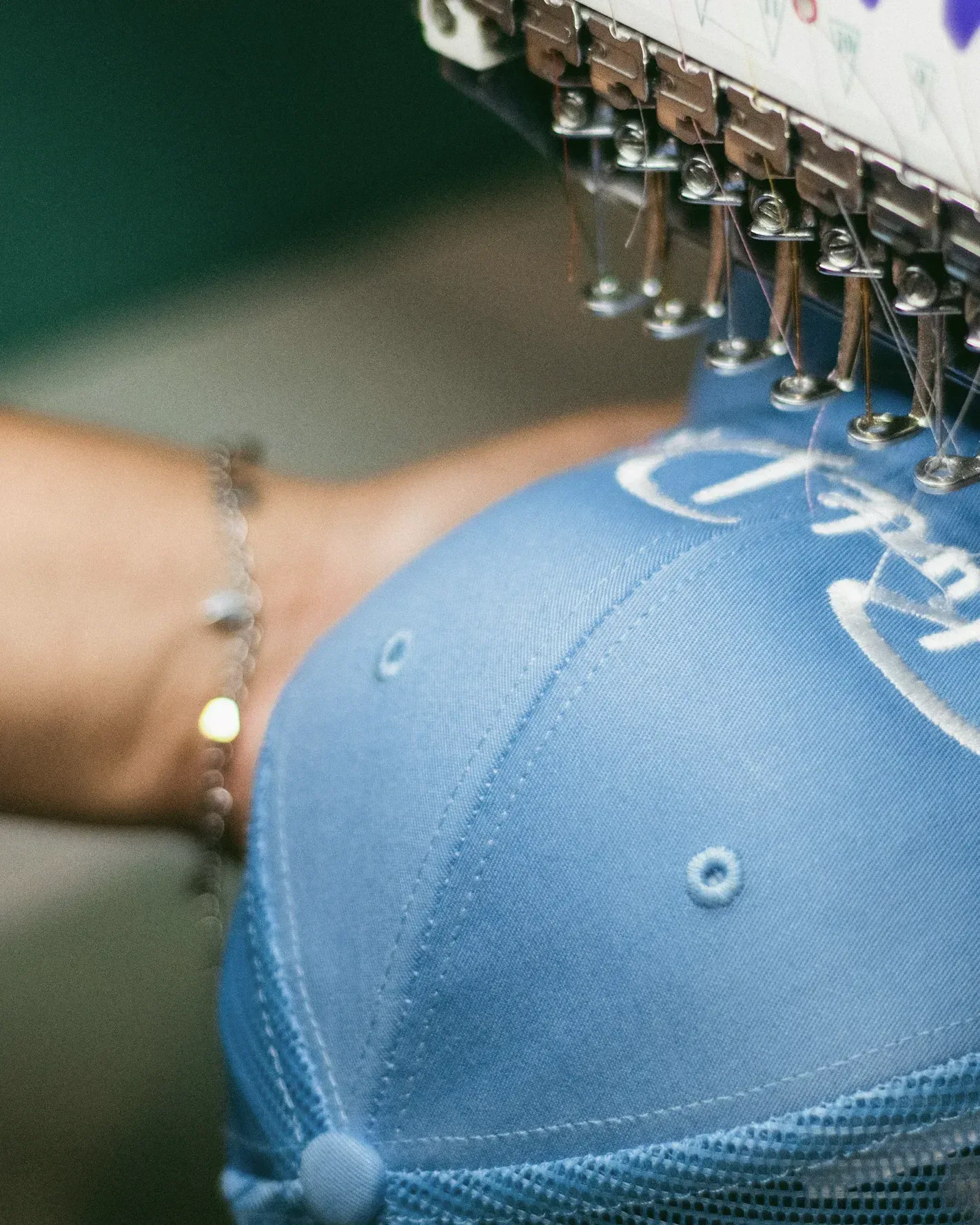
Decoration is usually where cost varies most between two caps that look similar. For embroidery, the main driver is stitch count, which depends on the size of the design and how much area is filled. A large filled logo takes longer to sew than an outline of the same size. 3D puff costs more than flat embroidery because it needs a foam underlay, denser stitching and more careful digitizing. Each additional position, such as a side logo or back arch text, adds handling time as well as stitches, because the cap has to be re-hooped.
Patches carry their own production step. A woven or embroidered patch is made first, then sewn or heat-applied to the cap. Custom PVC and leather patches need molds, dies or other setup. Printing methods such as screen print and heat transfer have setup per color and per design. Sublimation works on polyester and suits detailed designs on light base colors.
- Reduce filled areas and use outline or satin borders where the design allows.
- Limit thread colors; each color change takes machine time.
- Use one main position and keep secondary positions small.
- Reserve 3D puff for bold, simple shapes where the effect is worth the cost.
- Choose a patch when the same badge is used across several cap styles.
For a method comparison, see flat vs 3D puff embroidery.
Trims, labels and packaging
Closures range from standard plastic snaps to metal buckles, leather straps and custom-branded hardware. Inside the cap, the sweatband material, seam tape and labels all contribute. Custom woven labels and printed seam tape need setup and usually come with their own minimums. Packaging choices, from bulk cartons to individual polybags, hang tags or boxes, add cost per unit and can change carton size and freight volume. Options are listed on private label packaging.
When a closure or label is part of the brand identity, it is worth paying for. When it is not, standard components keep cost and complexity down. A useful test is whether the wearer will ever see or touch the detail.
Logistics and delivery terms
Caps Island ships by road, air or sea. Air is fastest and most expensive per kilogram; sea is slowest and most economical for large volumes; road suits many European destinations. Caps are light but bulky, especially structured styles, so carton volume often matters more than weight. Careful nesting and agreed packing ratios can reduce the number of cartons.
Timing is a cost factor too. A compressed schedule pushes freight toward air and leaves no room for a second sample round, which can turn a minor correction into a delay. Allow for tech pack approval and sampling of 7–14 days depending on the design before bulk starts, and remember that bulk lead time is confirmed on the quotation and depends on quantity, materials and decoration.
The Incoterm on the quotation decides who pays which part of the journey and who carries risk. Under EXW the buyer arranges everything from the seller's premises. FOB applies to sea freight and ends the seller's responsibility once goods are on board the vessel. Under DAP the seller delivers to an agreed place, and the buyer handles import clearance and duties. Under DDP the seller also covers import duties and taxes. More on delivery options is on international orders and delivery.
Managing cost without weakening the product
The best savings come from decisions made before sampling, when changing the specification is cheap. After the sample is approved, changes cost time as well as money, and some reset the sample entirely. Work through these points while the brief is still open.
- Decide which features the wearer will notice and protect those
- Use stock fabric colors where exact brand color is not critical
- Consolidate colorways and keep decoration consistent across them
- Simplify artwork for embroidery rather than only shrinking it
- Choose standard closures unless the closure is part of the brand
- Plan timing so freight can go by road or sea rather than air
- Request the quotation on the Incoterm you actually need
Two savings deserve caution. Downgrading buckram or brim board saves little per unit but shows immediately in how the cap holds its shape. Thinning embroidery density to reduce stitch count can let the cap fabric show through the stitching. Both are savings the wearer notices. It is usually better to simplify the design than to weaken its execution.
When you are ready, send your specification through request a quote. The more complete it is, the more accurate the first quotation will be. The RFQ guide lists what to include.
Questions, answered
Does a larger order always lower the unit price?
Usually, because setup costs are spread across more pieces. The effect is weaker if the larger order is split into many colorways or decoration variants, each with its own setup.
Why does 3D puff embroidery cost more than flat embroidery?
It needs a foam underlay, denser stitching to cover the foam and more careful digitizing, which adds material and machine time per cap.
Is a five-panel cap cheaper than a six-panel cap?
Not automatically. A five-panel has fewer seams, but details such as a foam front, mesh back or contrast brim can outweigh that difference.
Why do quotations from different suppliers vary so much?
They often price different specifications or delivery terms. Check quantity per variant, materials, decoration, labels, packaging and Incoterm before comparing unit prices.
Let's make your cap.
Style, quantity, colors and artwork are enough to start. A project contact replies with questions or a quotation.