Snapback vs Strapback vs Hook-and-Loop Closures
The closure at the back of a cap sets how it adjusts, how it looks and what it signals about the product. This guide compares snapback, strapback, hook-and-loop, stretch-fit and drawcord closures for buyers specifying custom caps.
Updated · Caps Island product development
Key takeaways
- Snapbacks use an adjustable plastic snap strap and suit streetwear and flat-brim styles.
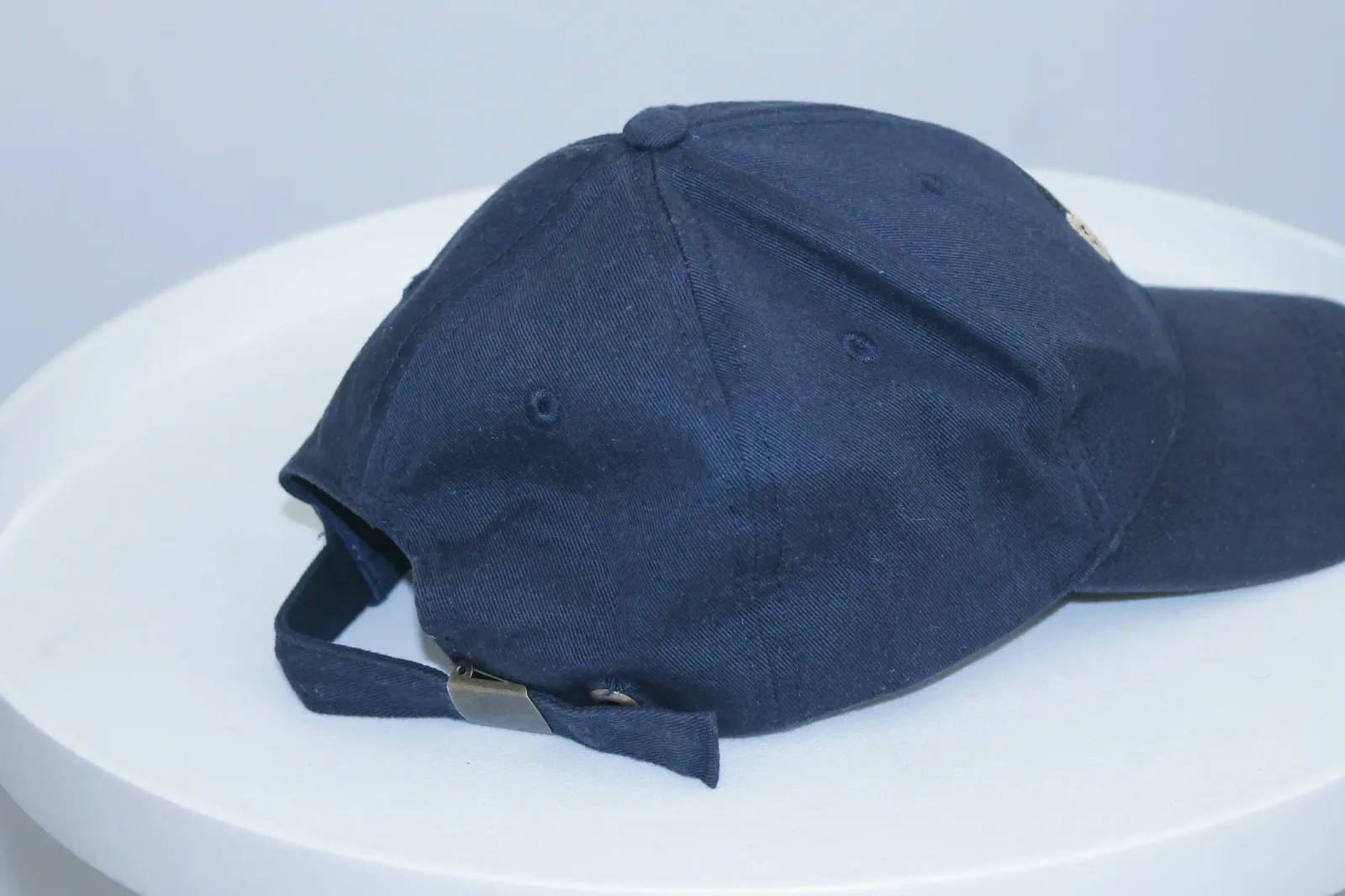
- Strapbacks use a fabric or leather strap with a metal buckle or slide and suit dad caps and premium casual caps.
- Hook-and-loop adjusts quickly and finely, which suits sport, performance and promotional caps.
- Stretch-fit and fitted caps have no rear adjustment and depend on choosing the right sizes.
- Decide the closure together with the rear decoration, since the opening shapes the available space.
Why the closure matters
The closure decides how a cap adjusts to different heads. For a buyer, it also affects how many wearers a single size can fit, how the cap looks from behind, and what kind of product the cap appears to be. A strapback with a brass buckle signals a different product from a plastic snapback, even when the front is identical.
Most adjustable caps are one size, covering the common range of adult head sizes; typical cap sizes run from roughly 55 to 61 cm head circumference. Adjustable closures let a single size cover much of that range, which simplifies ordering. Fitted and stretch-fit caps cover narrower size bands and need a size split.
Snap
Strap + buckle
Hook-and-loop
Fitted / stretch
Elastic + toggle
Snapback
A snapback closure uses two plastic straps: one with a row of studs and one with matching holes. The wearer presses them together at the chosen size. It is simple, durable, light and inexpensive to produce, and it is strongly associated with flat-brim streetwear caps and high-profile structured fronts.
The snap strap is usually color-matched to the crown, though a contrast strap is a simple design detail. Adjustment is in steps rather than continuous. Many wearers see the snapback as part of a specific style, so it is the natural choice when your range is built around snapback caps and the look that goes with them.
Branding on the snap strap itself is limited, since the straps are molded plastic. Rear branding on snapbacks usually sits on the rear panels above the opening, often as a small embroidered wordmark or a woven label stitched near the strap. For a streetwear drop, this rear mark is visible whenever the cap is worn backward, so it deserves as much attention as the front.
Strapback
A strapback uses a strap, usually fabric matching the crown or leather or faux leather, threaded through a metal buckle or slide. Adjustment is continuous, and the hardware adds visual weight to the back of the cap. Strapbacks are the classic closure for washed dad caps and premium casual caps.
The strap and hardware are also a branding opportunity. A leather strap can carry a debossed mark, and buckles can be specified in different finishes. A lifestyle brand launching a washed cotton cap might pair a tonal fabric strap with an antique brass slide to make the cap feel more considered than a standard snapback. Hardware options and finishes are confirmed on the quotation.
Hook-and-loop
Hook-and-loop closures use one strap with hooks and one with loops. They adjust quickly and finely, and are easy to use with one hand. That makes them popular on performance caps, running caps, visors and promotional caps given to a broad audience with unknown head sizes.
The trade-off is appearance and wear. The hook side can catch hair, knitwear and other fabrics, and the closure looks more functional than fashion. For a sports event distributing caps to participants, those trade-offs usually do not matter; for a fashion label, they usually do.
Hook-and-loop straps are usually made in the crown color, and a small woven label or embroidered mark can be placed on the strap tab or on the rear panels. On performance caps, the closure is often paired with a moisture-wicking sweatband and lightweight crown fabric, so the whole cap stays light. On visors, hook-and-loop is one of several options alongside elastic and snap closures.
Stretch-fit, fitted and drawcord
Fitted caps have a closed back with no opening. They are made in specific sizes, sometimes with a little stretch built into the band. Stretch-fit caps use elastic in the crown or band to cover a range of sizes, usually sold in a small number of size bands. Both give a clean back with space for rear embroidery, but they require a size split in the order. A fitted wool blend cap is a typical example.
The size split is the main planning task for fitted and stretch-fit caps. A team ordering stretch-fit caps for players and staff can collect head sizes in advance; a retail brand has to estimate demand per size, and any misjudged size becomes leftover stock. If you cannot predict sizes well, an adjustable closure removes that risk entirely.
Drawcord or toggle closures use a cord pulled through a channel and held with a toggle. They are common on camp caps, five-panels and bucket hats, and suit outdoor and technical styles. The cord and toggle can be color-matched or used as a contrast accent, and on bucket hats a cord may also serve as a chin strap. Check on the sample that the toggle grips the cord firmly and that cord ends are finished so they do not fray.
Comparison
| Closure | Adjustment | Look and association | Best for |
|---|---|---|---|
| Snapback | Stepped, plastic studs | Streetwear, flat-brim | Snapbacks, high-profile caps |
| Strapback | Continuous, buckle or slide | Casual, premium, vintage | Dad caps, lifestyle caps |
| Hook-and-loop | Continuous, quick | Functional, sporty | Performance caps, visors, promotional caps |
| Fitted | None, sized | Clean, classic | Retail ranges with size split |
| Stretch-fit | Elastic, size bands | Clean, sporty | Team and retail ranges |
| Drawcord or toggle | Continuous, cord | Outdoor, technical | Camp caps, bucket hats |
Details to check on the sample
The closure is a small component that the wearer handles every time the cap goes on. Details that look minor on a tech pack become obvious in use, so review them carefully on the sample.
On snapbacks, check that the snap engages firmly at every position and releases without excessive force, and that the straps are attached securely at the rear panels. On strapbacks, check the strap length at both ends of the adjustment range, the finishing of the strap end, and that the buckle or slide holds its position without slipping. Leather and faux leather straps should be cut cleanly with consistent edges.
On hook-and-loop closures, check that the two strips align when closed and that the hook side does not extend beyond the loop side, where it would catch hair. On all adjustable caps, look at the rear arch, the curved opening above the closure: its edge is usually finished with binding, and the binding should be smooth and even because it sits against the back of the head.
Consistency across a range also matters. A brand selling a structured snapback and a washed dad cap side by side might deliberately use a snap strap on one and a strapback on the other, because each closure suits its style. What should stay consistent is the finishing: matching thread, the same binding quality, and hardware in a finish that fits the brand. Closure, brim and sweatband choices are best reviewed together, which is how they appear on the tech pack.
Choosing a closure for your project
Choose the closure from the product style, then check it against how the caps will be sold or distributed:
- Retail streetwear with flat brims: snapback.
- Washed dad caps and premium casual ranges: strapback with fabric or leather strap.
- Running, golf, event and promotional caps for unknown wearers: hook-and-loop.
- Retail ranges where a clean back matters and you can manage sizes: fitted or stretch-fit.
- Outdoor and camp styles: drawcord or strapback.
- Closure type and strap material.
- Hardware finish for strapbacks.
- Strap color: matched or contrast.
- Size split for fitted or stretch-fit caps.
- Rear decoration position and size relative to the opening.
- Confirmation of closure on the tech pack before sampling.
Closures are part of the wider set of finishing details covered on our brims, closures and finishing page. If you are undecided between two closures, request both on samples; sampling typically takes 7 to 14 days depending on design. When ready, request a quote with your preferred closure.
Questions, answered
What is the difference between a snapback and a strapback?
A snapback uses plastic straps with studs and holes for stepped adjustment. A strapback uses a fabric or leather strap with a metal buckle or slide for continuous adjustment.
Which closure fits the most people?
Adjustable closures such as hook-and-loop, strapback and snapback cover a wide range with one size. Fitted caps require ordering a size split.
Can the strap or buckle be branded?
Often, yes. Leather straps can be debossed and hardware finishes can be specified. Options are confirmed on the quotation.

Let's make your cap.
Style, quantity, colors and artwork are enough to start. A project contact replies with questions or a quotation.