Quality Control
Quality control on headwear means checking each stage against the approved sample and tech pack, not against a general idea of quality. Goods pass inspection before shipping. This page explains where inspections happen, what is checked on a cap and how acceptance criteria are agreed for each order.
The reference: approved sample and tech pack
Every inspection needs a reference. For a custom cap, that reference is the approved pre-production sample together with the tech pack version it was approved against. Colors, dimensions, decoration and labels are judged against these two items. If a detail is not in the tech pack or visible on the approved sample, it cannot be inspected reliably.
This is why approval is done in writing and why changes after approval go back through the tech pack. A clear reference protects both sides: the production team knows what to build, and the buyer knows what to expect. See product development and sampling for how the reference is created.
Inspection points
Inspection happens at three points in the production flow. Each catches different problems, and problems caught early are cheaper to fix.
| Inspection point | What is checked | Why it matters |
|---|---|---|
| Incoming materials | Fabric color and shade against the approved reference, fabric defects, mesh, sweatband, brim board, closures, labels and packaging components | A wrong shade or faulty trim found here costs material only, not finished caps |
| In-line (during production) | Cut panels, decoration on panels, first assembled caps, seam quality, panel alignment, brim setting | Systematic errors are corrected before they repeat across the order |
| Final (finished goods) | Finished caps drawn from packed goods, checked against sample and tech pack, plus packing and carton marking | Confirms the order meets the agreed criteria before shipping |
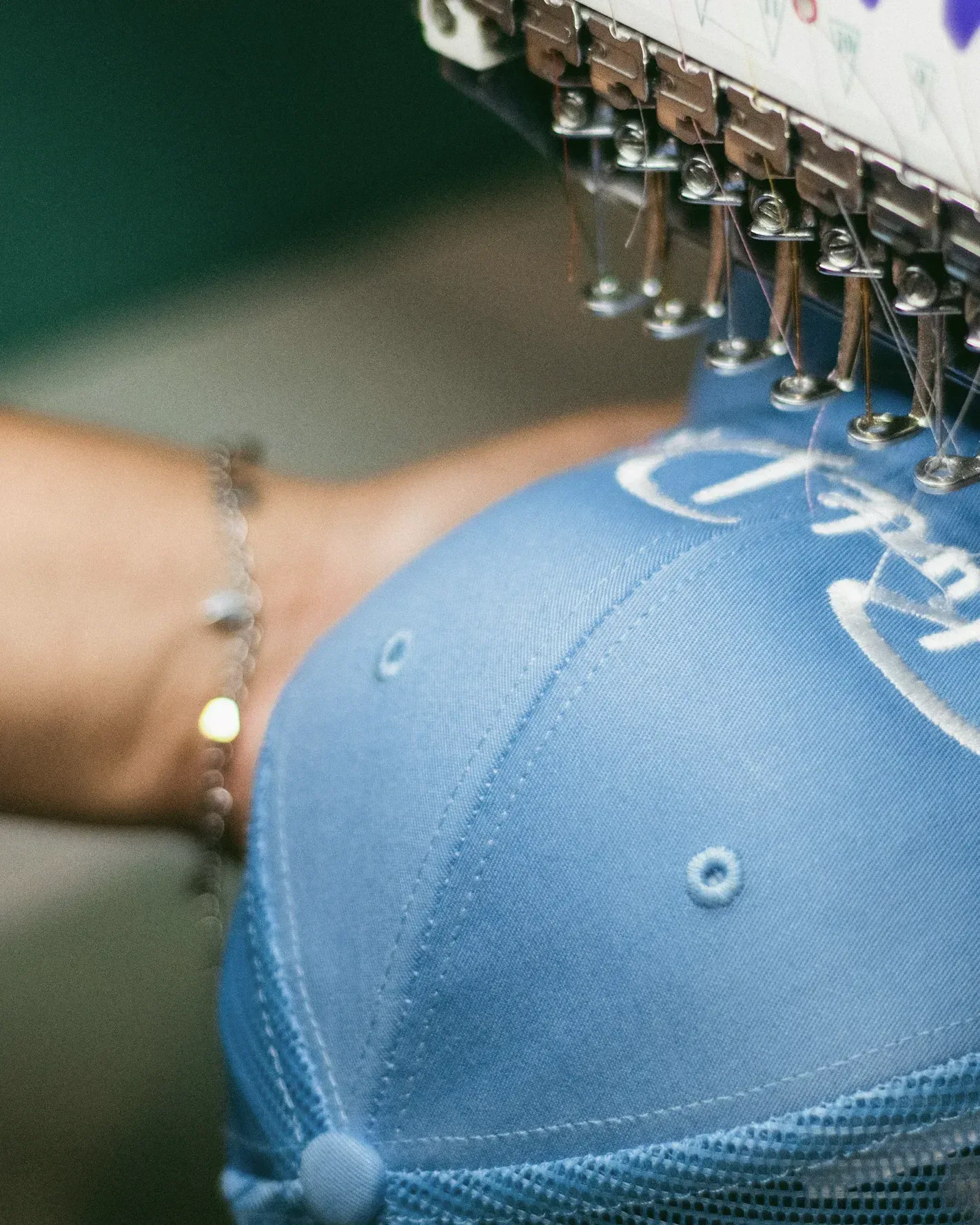
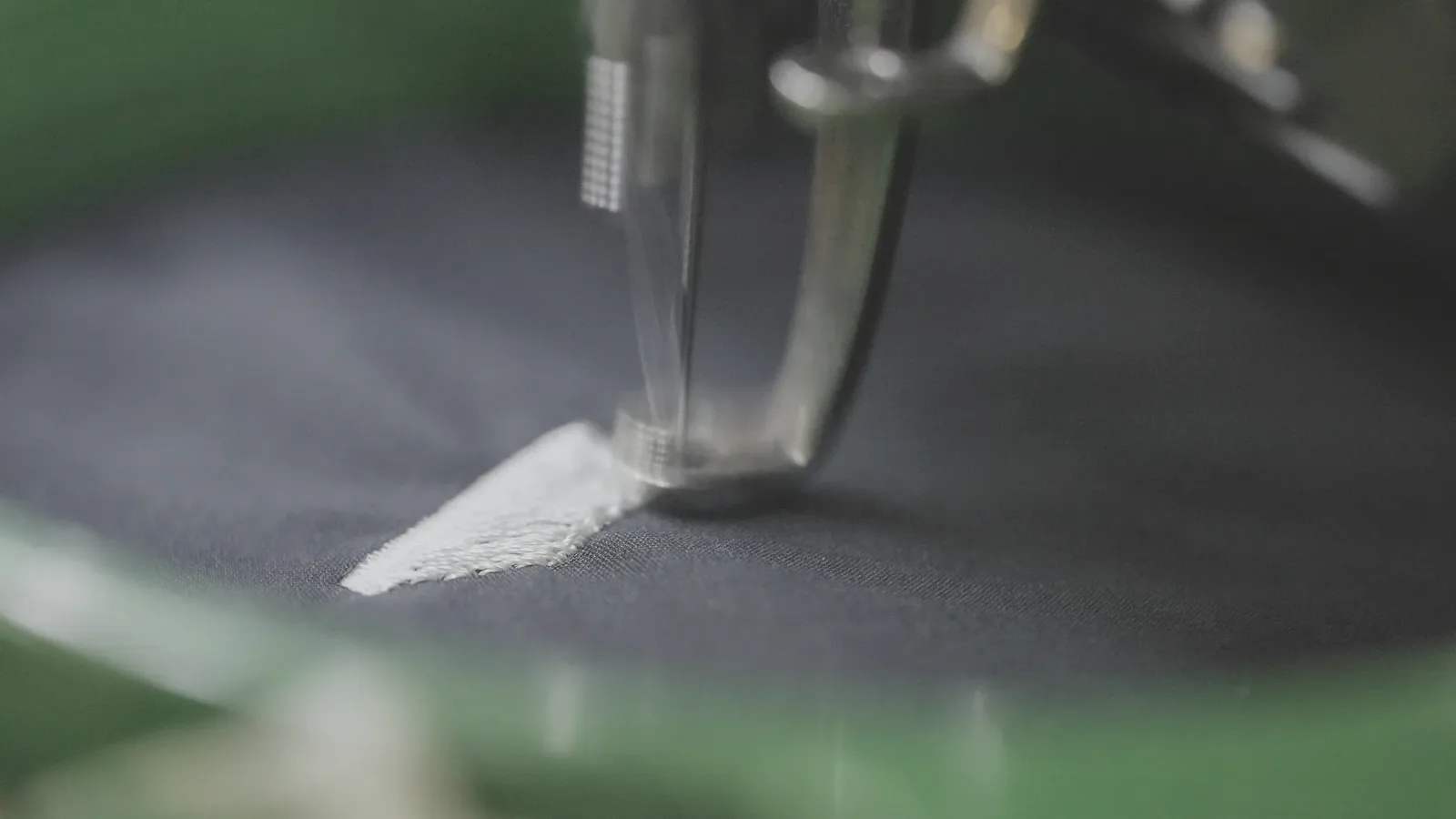
For decoration that is applied to flat panels before sewing, the in-line check of decorated panels is especially important. An embroidery error found at this stage affects panels; found at final inspection, it affects finished caps.
What is checked on a cap
Cap inspection follows a fixed sequence so nothing is skipped. The checklist below reflects the points typically reviewed on a finished cap.
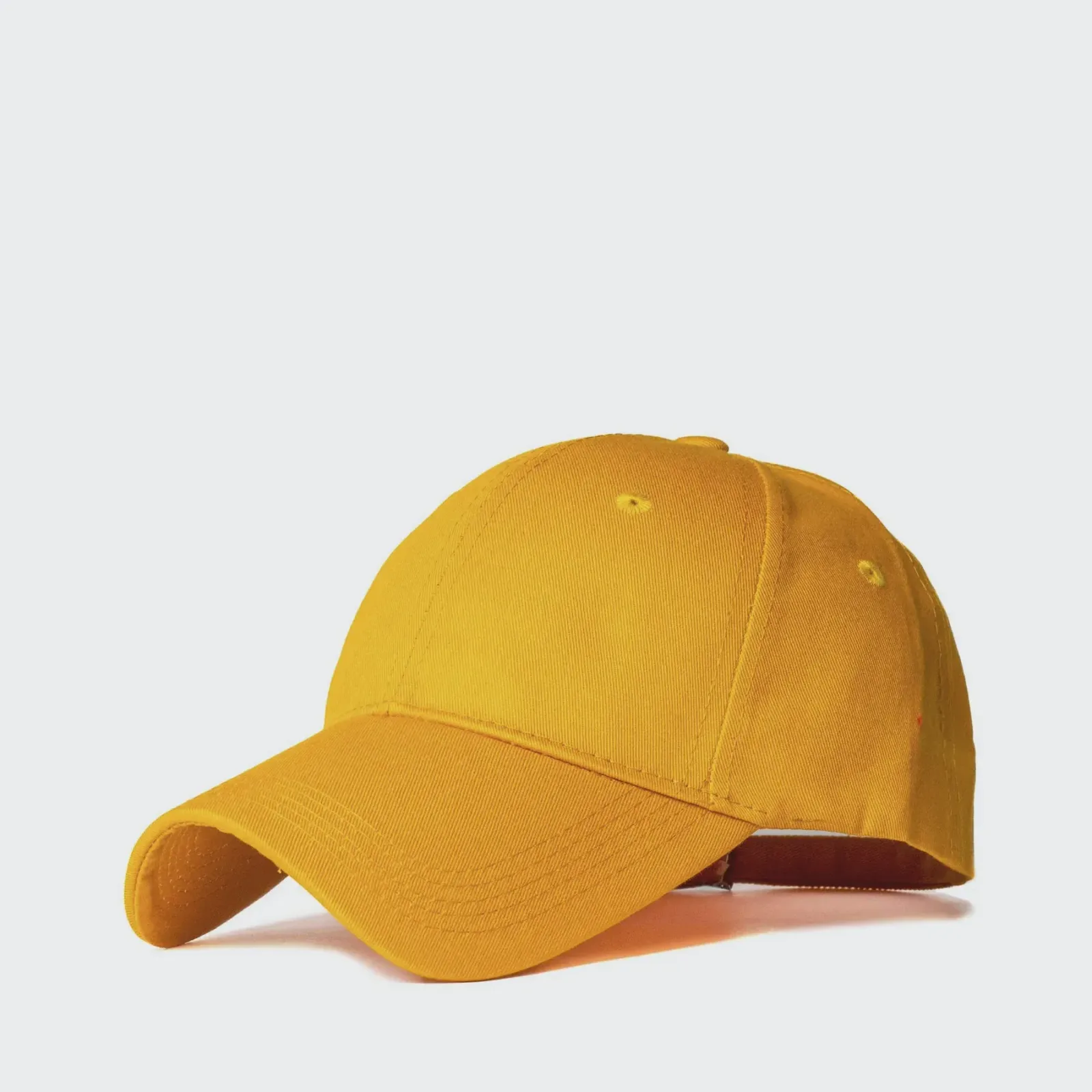
- Symmetry: crown is even left to right, top button centered, eyelets in matching positions.
- Panel alignment: seams meet at the top button, center seam straight and centered on six-panel caps.
- Crown shape: profile and height consistent with the approved sample; structured fronts free of creases or dents.
- Brim shape: curve or flatness as approved, brim set straight to the crown, stitch rows even and parallel.
- Embroidery density: fill coverage complete, no visible backing or gaps, no puckering around the logo.
- Embroidery registration: outlines aligned with fills, colors in the correct position, logo placed at the specified distance and angle.
- Color: fabric, thread and trims compared with the approved sample under consistent light.
- Closures: snaps engage and hold, buckles slide and lock, hook-and-loop aligned, fitted sizes correct.
- Labels: correct labels in the correct position, content matches the tech pack, securely sewn.
- Cleanliness: no loose threads, chalk marks, glue, stains or residue.
- Packaging: polybags, inserts, hangtags, stickers and carton marking as specified.
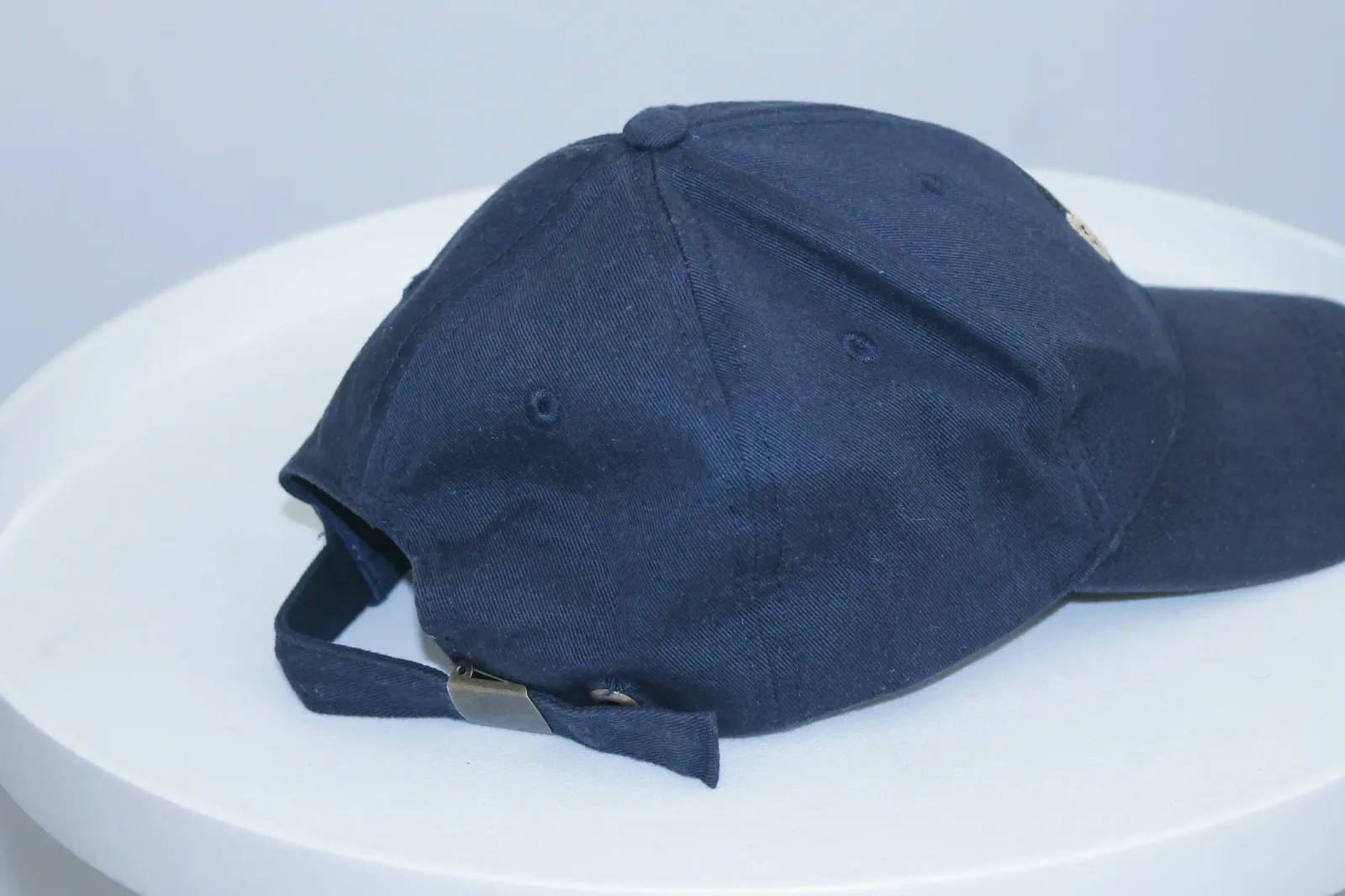
- Button
- Eyelet
- Side panel
- Front panel + buckram
- Brim (insert inside)
- Sweatband + seam tape
- Closure
- Panel seam, double topstitched
Measurements are taken with the cap on a flat surface or a head form, using the same method as for the approved sample: crown height, brim length and width, and head circumference or adjustment range. Logo position is measured from a fixed reference such as the brim seam or center seam, as defined in the tech pack. Beanies are checked for length, width, cuff depth and stretch recovery, and visors for band length and closure range.
Defect classification
Defects are usually grouped by severity so that criteria can be agreed in advance. The categories below are common in apparel and headwear inspection. What falls into each category for your order is agreed before production.
| Category | Description | Cap examples |
|---|---|---|
| Critical | Affects safety or makes the product unusable or non-compliant | Sharp metal edge on a buckle, wrong country of origin on a label |
| Major | Likely to cause a return or visibly differs from the approved sample | Logo noticeably off-center, wrong thread color, broken snap, crushed crown |
| Minor | Small deviation unlikely to affect sale or use | Short loose thread, slight stitch irregularity inside the cap |
Inspection levels and acceptance criteria
Inspection on a bulk order is normally done on a sample drawn from the finished goods, not on every cap. The number of caps checked and the number of defects allowed in each category define the acceptance criteria. Many buyers use an established sampling plan for this; others agree a simpler procedure for small orders.
- Inspection level and acceptance criteria are agreed per order, before bulk production starts.
- Tolerances for measurements, color and logo placement are defined against the approved sample.
- If an order does not meet the agreed criteria, the affected goods are sorted, reworked or replaced before shipping, as agreed.
- Buyers may appoint their own third-party inspector; the timing is coordinated in advance so the inspector sees packed goods.
What the buyer can do to support quality
Most quality disputes trace back to an unclear reference rather than to production. A few steps on the buyer side reduce that risk.
- Approve the tech pack and sample in writing, with comments resolved.
- Keep the approved sample sealed and labeled as the reference.
- State any critical points, such as a brand color or logo position, explicitly.
- Agree inspection level and acceptance criteria before production, not at shipment.
- Check goods on arrival and report any issue with photos and carton numbers.
The cap quality control checklist can be used as a starting point for your own receiving inspection. For shipping and documents after inspection, see international orders and delivery.
Questions buyers ask
Is every cap inspected?
Final inspection is normally carried out on a sample drawn from the finished goods. The inspection level and acceptance criteria are agreed per order before bulk production.
Can we send our own inspector?
Yes. A buyer-appointed or third-party inspection can be arranged. Timing is coordinated in advance so the inspector can check packed goods before shipping.
What is the reference for color approval?
The approved pre-production sample and the color references in the tech pack. Color tolerance is agreed per order.
Let's make your cap.
Style, quantity, colors and artwork are enough to start. A project contact replies with questions or a quotation.