Five-Panel vs Six-Panel Caps
The main difference between five-panel and six-panel caps is the front: a six-panel cap has a center seam, a five-panel cap has one wide front panel. That single change affects logo placement, silhouette and which styles each layout suits.
Updated · Caps Island product development

Key takeaways
- A six-panel cap has two front panels joined by a center seam; a five-panel cap has one seamless wide front panel.
- Six-panel caps are the default for baseball caps, snapbacks and dad caps, and usually follow head shape more closely.
- Five-panel caps give an uninterrupted front surface, which suits wide logos, patches and prints.
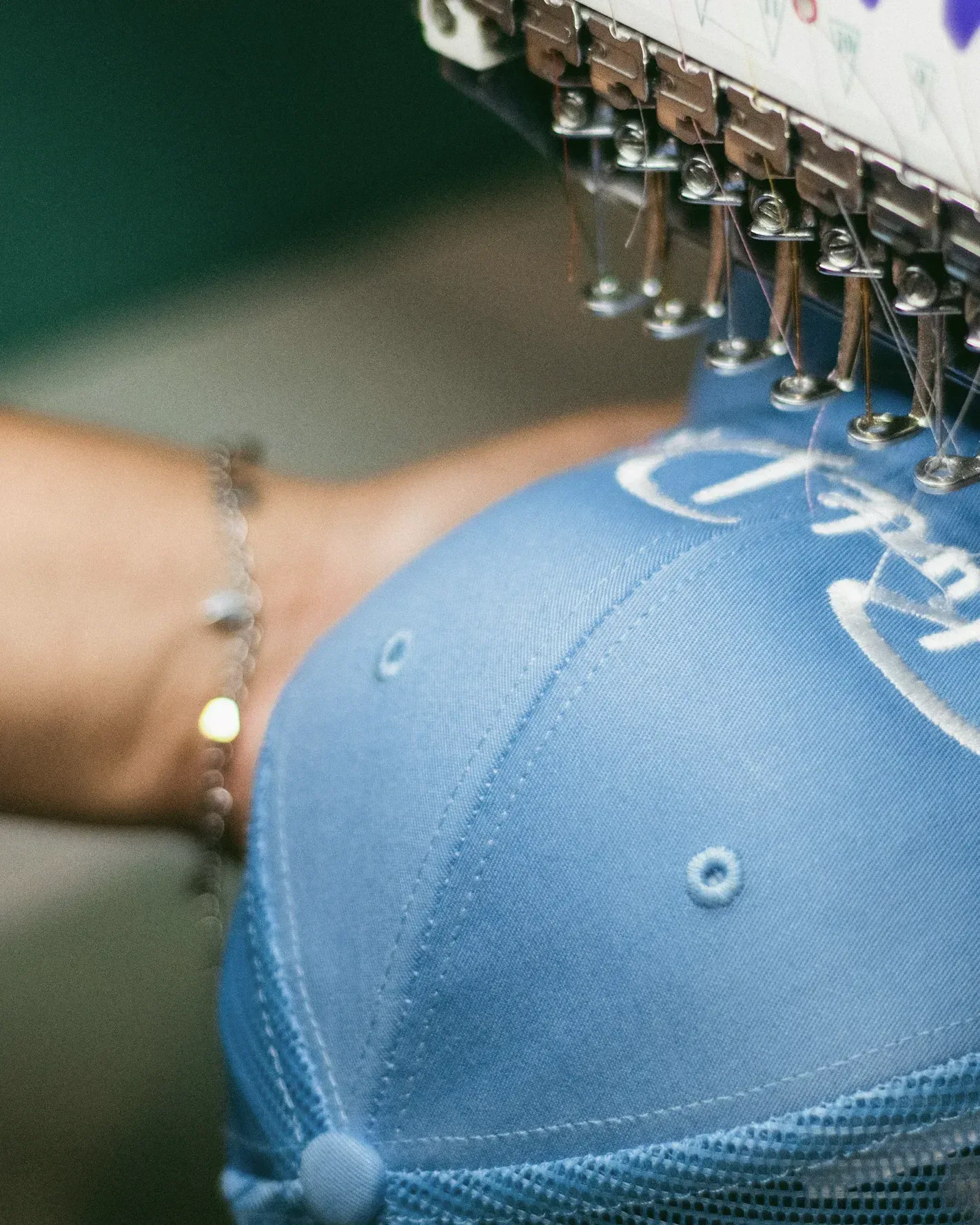
- Embroidery across a center seam is routine, but very fine detail placed directly on the seam should be avoided.
- Choose the panel layout from the silhouette and decoration you want, then confirm placement on the tech pack.
How the panels are arranged
A cap crown is sewn from shaped fabric panels that meet at the button on top. The number of panels and where the seams fall decide how the crown is shaped and where a logo can sit.
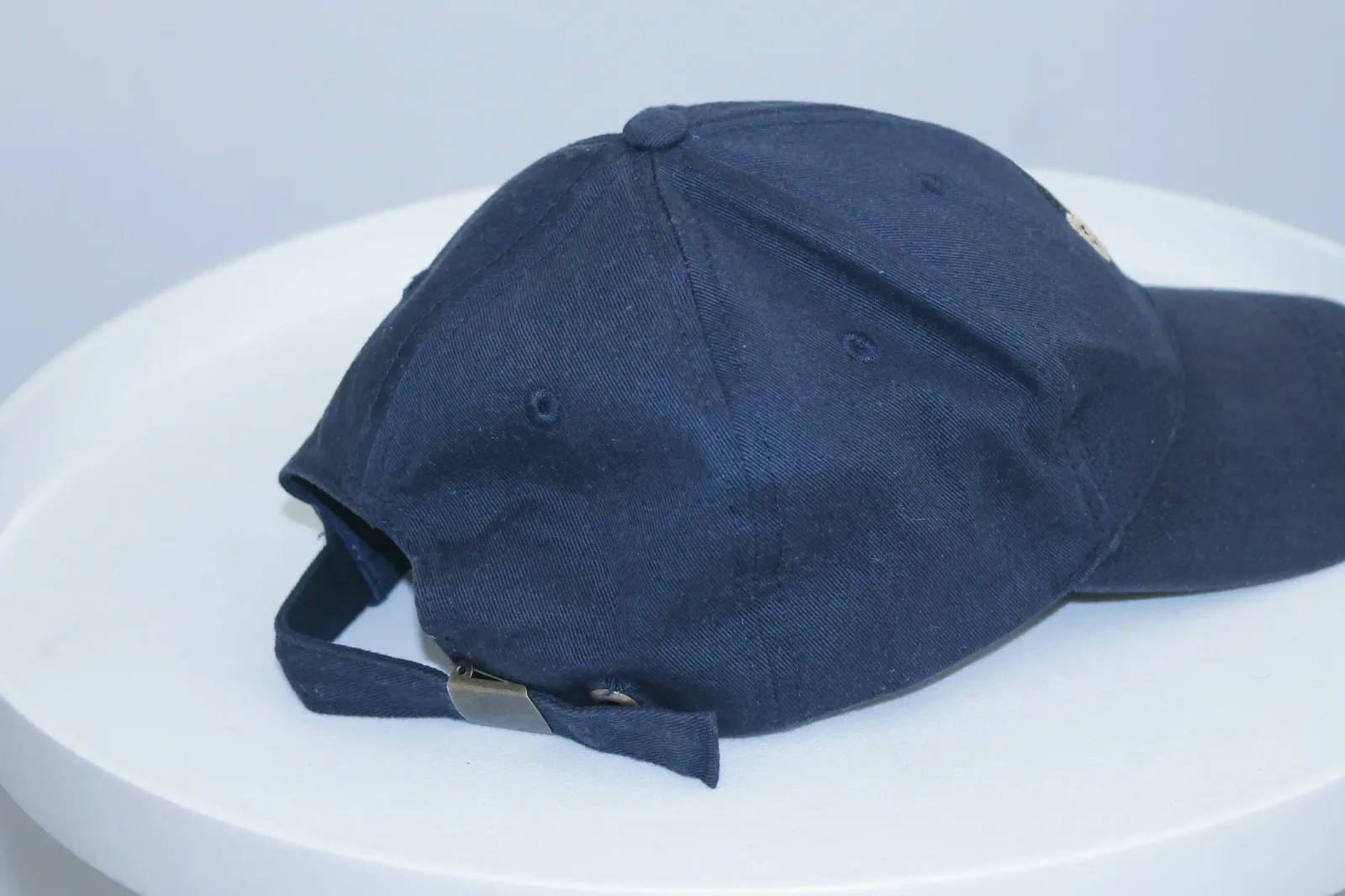
In a six-panel cap, the crown is built from two front panels, two side panels and two rear panels. The two front panels meet at a center seam that runs from the brim up to the button. On structured caps, those front panels are usually backed with buckram, a stiff support layer that holds the front upright.
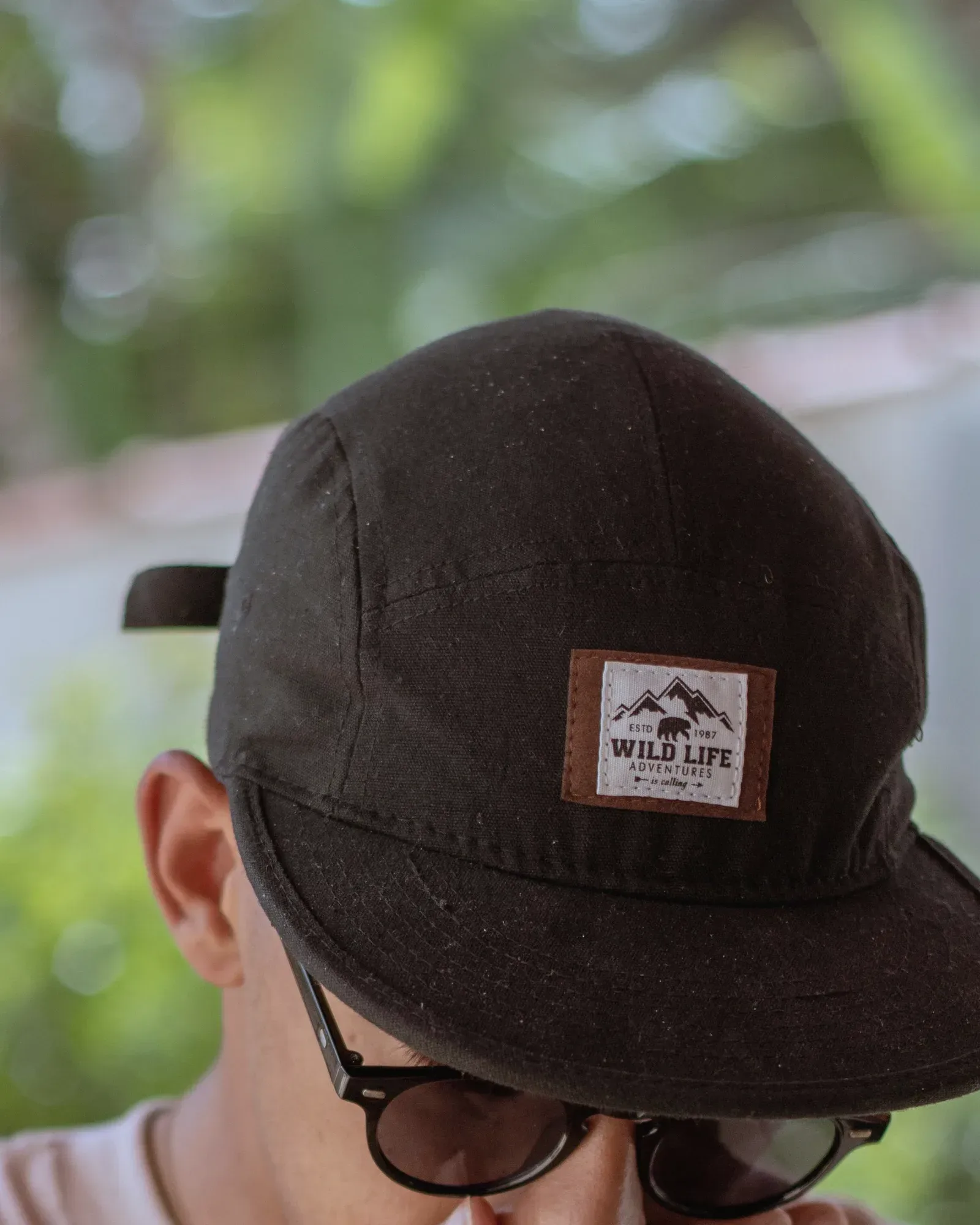
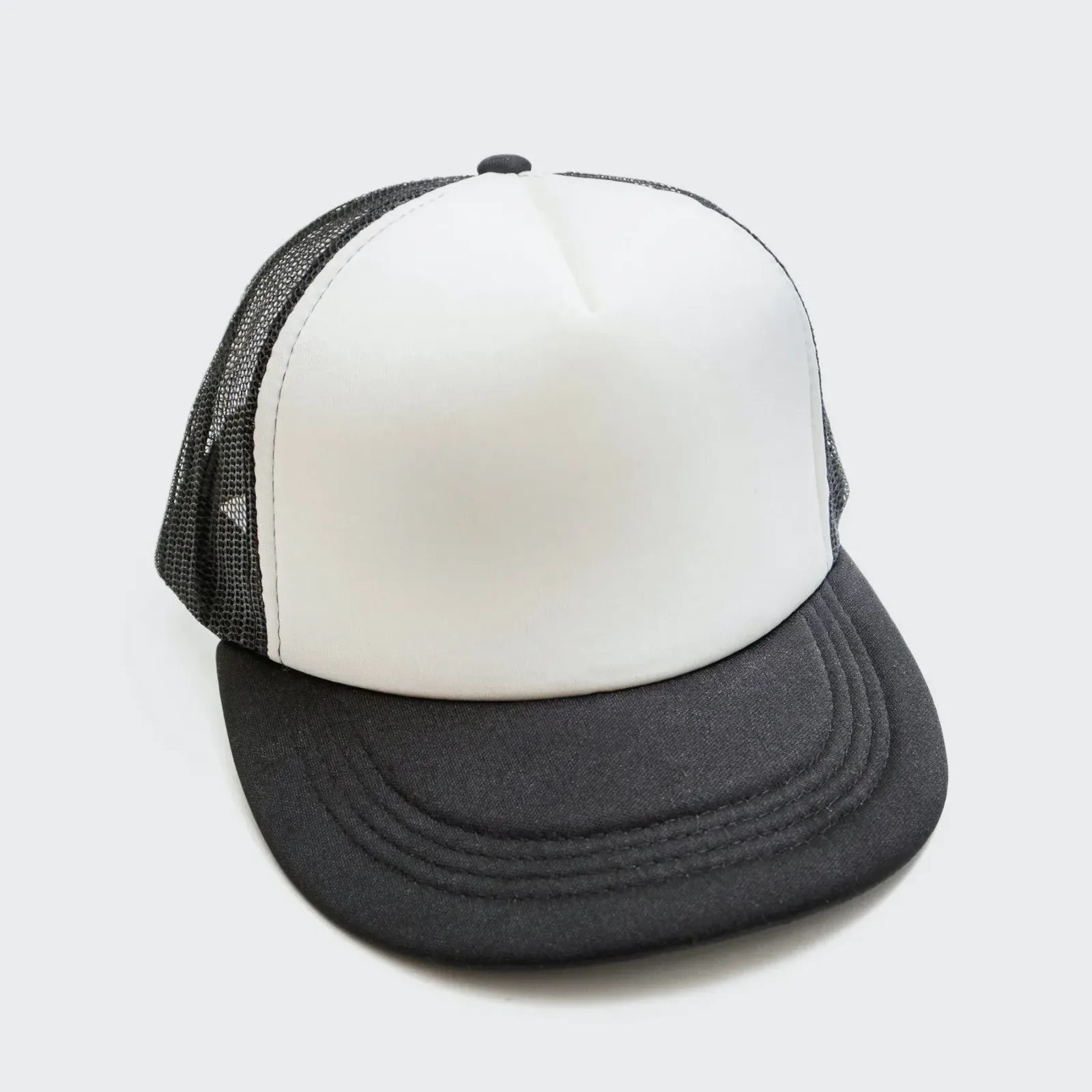
In a five-panel cap, the two front panels are replaced by one wide front panel with no center seam. How the remaining panels are cut depends on the style and pattern. On a trucker cap they are typically side and rear mesh panels; on camp-style caps the pattern is often lower and flatter. The exact layout for your project is shown on the tech pack.
Front of cap at the bottom
Six-panel · center front seam
Five-panel · one wide front panel
Seven-panel and other layouts also exist, mostly for fashion and specialty styles. For most buyers, the practical choice is between five and six, so that is what this guide covers. A broader explanation of panel construction is on our cap construction and panel design page.
Where six-panel caps work best
The six-panel layout is the default for most baseball-style headwear. Because the crown is divided into more, narrower segments, it can follow the curve of the head closely. That makes it the natural base for baseball caps, snapback caps, fitted caps and washed dad caps.
Six-panel caps are available in every profile and structure combination: low-profile unstructured dad caps, mid-profile structured caps, and high-profile flat-brim snapbacks. If you are building a range that mixes several of these, keeping all of them six-panel gives your logo a consistent placement and size reference across styles.
Where five-panel caps work best
Five-panel caps are common on trucker caps and camp caps. The one-piece front gives a smooth surface with no seam through the middle, which is why many truckers use a foam or fabric front with a wide print or patch.
Camp-style five-panels usually have a lower, flatter crown and are often made in nylon, canvas or ripstop. They are popular with outdoor, skate and lifestyle labels because the shape reads differently from a classic baseball cap. If you want a cap that looks deliberate rather than standard, a five-panel is often the quickest route. Browse examples under five-panel caps and trucker caps.
Side-by-side comparison
| Factor | Six-panel | Five-panel |
|---|---|---|
| Front construction | Two front panels with a center seam | One wide front panel, no center seam |
| Typical styles | Baseball caps, dad caps, snapbacks, fitted caps | Trucker caps, camp caps, some fashion caps |
| Fit | Follows head curvature closely | Depends on pattern; camp caps often sit lower and flatter |
| Front logo | Works across the seam; fine detail on the seam line can distort | Uninterrupted surface for wide logos, patches and prints |
| Structure options | Structured, soft-structured or unstructured | Structured or unstructured; foam fronts common on truckers |
| Brand signal | Classic, familiar | Outdoor, skate, workwear or retro, depending on style |
How the panel layout affects your logo
On a six-panel cap, front embroidery is stitched across the center seam. This is entirely routine and the seam is usually invisible under a solid logo. Problems appear with very fine details: a single thin line, small lettering or a narrow gap that falls exactly on the seam can look uneven because the seam creates a slight ridge. A good digitizer will shift the design, adjust stitch direction or ask you to approve a small offset.
On a five-panel cap the front is flat and continuous. That suits horizontal wordmarks, patches with straight edges, and prints such as screen print or heat transfer that need an even surface. A rectangular woven or leather patch is a common choice on five-panels for exactly this reason.
Panel layout also affects the size of the decoration area. A high-profile six-panel snapback offers a tall front for a large logo, while a low camp five-panel offers a wider but shorter area. For guidance on decoration methods, see Flat Embroidery vs 3D Puff Embroidery.
Secondary positions change too. On a six-panel cap, each side panel is a clear, self-contained area for a small mark or flag label. On a five-panel cap the side panels are often narrower or shaped differently, so a side logo that fits comfortably on a six-panel may need resizing. On truckers with mesh sides, secondary branding usually moves to the front, the rear arch or a label, because mesh is not a good base for embroidery.
Fit, comfort and wear
Panel count influences how a cap sits as much as how it looks. A six-panel crown, with its narrower segments, distributes shape evenly around the head and is generally the more forgiving choice for a broad group of wearers. That is one reason staff and event orders lean toward six-panel caps: the same cap has to fit many people reasonably well.
Five-panel caps vary more by style. A trucker with a foam front sits high and upright. A camp cap usually sits shallower and closer to the top of the head, which some wearers like and others find less secure. Crown depth is set by the pattern, not by the panel count alone, so if fit is a concern, compare a sample of each on several people rather than relying on the description. Our guide to cap crown profiles explains how crown height and front slope affect fit.
There are also practical differences in wear. Every seam is a line of stitching and a slight ridge on the inside. Five-panel caps have one seam fewer at the front, which some wearers notice as a smoother forehead area, especially on unstructured styles. In practice, seam taping and the sweatband matter more for comfort than the number of panels, so specify those deliberately whichever layout you choose.
Finally, think about the range as a whole. Switching panel layout means a different pattern and a separate sample, not just a variant of the same cap. A label adding a five-panel to an existing six-panel range should budget time for development and approve the new logo placement on its own tech pack, rather than assuming the existing artwork transfers directly.
Choosing the layout for your project
Start from the silhouette and decoration you want, not from the panel count. A few examples:
- A corporate buyer ordering caps for staff with a compact embroidered logo: a six-panel, mid-profile cap is the familiar, safe choice.
- An outdoor brand with a wide horizontal wordmark: a nylon five-panel camp cap gives the logo a clean, uninterrupted surface.
- A festival merchandise run with a full-color graphic: a five-panel trucker with a foam front takes a wide print well.
- A fashion label building a range of dad caps and snapbacks: keeping everything six-panel gives consistent logo placement across styles.
- Decide the silhouette first: classic baseball, trucker or camp.
- Check whether your logo is wide and horizontal or compact and centered.
- Identify fine details that could fall on a center seam.
- Confirm structure: structured, soft-structured or unstructured.
- Review the panel layout and logo placement on the tech pack before sampling.
Avoid choosing a five-panel only because it looks different, if your logo is compact and your customers expect a classic baseball fit. Equally, avoid forcing a wide wordmark onto a six-panel front when a five-panel would present it cleanly. The panel layout should serve the logo and the wearer, not the other way around.
If you are unsure which layout fits your artwork, send both options in your brief. The quotation and tech pack will show how each would be built, and sampling, typically 7 to 14 days depending on design, confirms the result. You can start with a quote request.
Questions, answered
Is a five-panel cap the same as a trucker cap?
Not always. Many trucker caps use a five-panel layout with a one-piece front, but truckers can also be six-panel. Five-panel camp caps are a different style with a lower, flatter crown.
Can I embroider over the center seam of a six-panel cap?
Yes. Front embroidery on six-panel caps routinely crosses the center seam. Very thin lines or small text placed exactly on the seam can look uneven, so check placement on the tech pack.
Which layout is better for a patch?
Both work. A five-panel front gives a flat, seamless area that suits wide rectangular patches; on a six-panel cap a patch sits over the seam, which is common and usually unproblematic.
Let's make your cap.
Style, quantity, colors and artwork are enough to start. A project contact replies with questions or a quotation.